Top Poker Books Every Player Should Read

The reading list for serious poker players hasn’t changed much in twenty years. The same handful of books keep appearing on recommended lists because they do the job well enough that nothing has fully displaced them — theory, psychology, math, and game history covered by people who actually played at a high level. This is the list worth working through.
The Basics and Theories
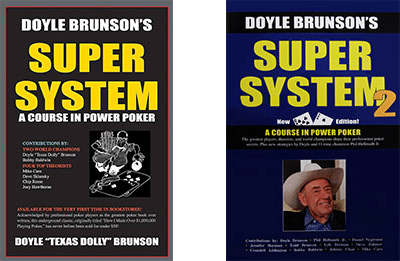
Super/System by Doyle Brunson
When Brunson published this in 1979 — originally titled How I Made Over $1,000,000 Playing Poker — other professionals were furious. He had put into print the strategy that had kept a small group of road gamblers ahead of the field for years. The contributors read like a who’s who of the era: David Sklansky on stud, Chip Reese on razz, Mike Caro on tells. Brunson wrote the no-limit Hold’em section himself, and that’s what most people come for. The core of it: aggression, position, big hand–big pot. Those fundamentals haven’t dated. What has dated: the lowball, draw, and stud sections are largely academic for a modern Hold’em player. You can skip them and still get full value from the book.
Super/System 2 (2005) is a companion volume, not a revision — Brunson didn’t reprint the original, he built alongside it. The contributor roster reflects the post-boom era: Todd Brunson on limit Hold’em, Jennifer Harman on stud, Daniel Negreanu on Omaha, T.J. Cloutier on tournament play. It fills gaps the first book left: Omaha, mixed games, and a no-limit Hold’em section updated for the modern game. Read the original first. If the game coverage in SS2 applies to what you play, it’s worth adding.
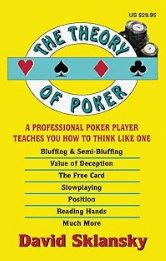
The Theory of Poker by David Sklansky
Sklansky doesn’t explain poker from first principles — he builds a framework for thinking about it. The core concept, the Fundamental Theorem of Poker, is simple enough to state in a sentence and complex enough to spend years applying. The book covers position, bluffing, deception, pot odds, and hand reading not as a list of tips but as connected ideas. Worth reading early; worth re-reading later.
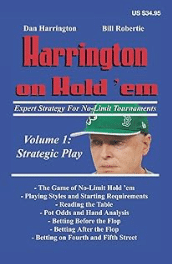
Harrington on Hold ’em by Dan Harrington
The closest thing tournament poker has to a textbook. Three volumes built around hand examples with detailed breakdowns of the reasoning behind each decision — not just what to do, but why, and where the alternatives would have led. The play-by-play format works in a way that abstract strategy writing often doesn’t. Required reading if Texas Hold ’em tournaments are your focus.
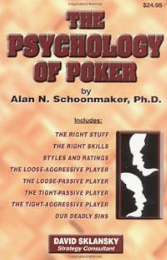
Psychology of Poker by Alan N. Schoonmaker
Schoonmaker approaches poker from the psychology side rather than the strategy side, which makes it useful in a different way than most books on this list. The core argument: understanding what kind of player someone is — their motivations, their fears, their self-image — helps you predict their decisions better than card-reading alone. If you’ve read the strategy books and still feel like you’re missing something at live tables, this is probably it.
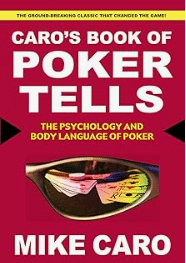
“Caro’s Book of Poker Tells” by Mike Caro
A twitch of the eye, a glance at the chips. Caro catalogued physical tells from decades of live play — the gestures, timing patterns, and body language that leak information at the table. Some of it shows its age (written for live cardrooms long before online play existed), but the underlying principle holds: most players’ behaviour is readable if you know what to look for. The most immediately useful book on this list for live players.
Advanced Strategies
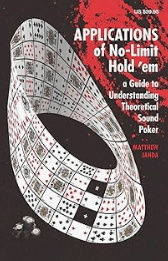
Applications of No-Limit Hold ’em by Matthew Janda
The most technical book on this list. Janda builds a GTO framework from the ground up — range construction, bet sizing, balance, exploitative adjustments — and works through it with specific hand examples. It’s genuinely demanding; this isn’t a book to skim. If Sklansky and Harrington form the foundation, Janda is where you go when you’re ready to stress-test it. Not a beginner book.
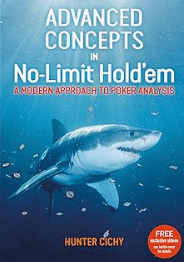
Advanced Concepts in No Limit Hold ’em by Hunter Cichy
Cichy builds on where Janda leaves off. The focus is exploitative play at higher stakes — how to move away from balanced ranges when the situation calls for it, how to maximise value with strong hands, and how to identify weaknesses in opponents’ strategies. Narrower than Janda but more immediately actionable for players already thinking in terms of ranges and board textures.
Biographies and Autobiographies
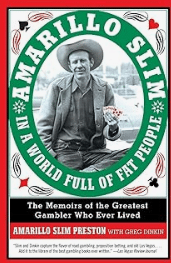
Amarillo Slim in a World Full of Fat People by Amarillo Slim
Amarillo Slim was one of the most colourful figures poker ever produced — gambler, hustler, four-time WSOP bracelet winner. The memoir covers his career during the game’s wild years, before poker went mainstream. It’s not a strategy book and doesn’t pretend to be. Read it for the stories — they’re genuinely good — and for the picture it paints of what high-stakes poker looked like before television found it.
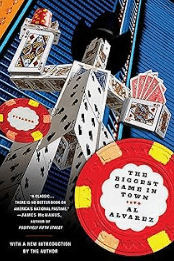
The Biggest Game in Town by Al Alvarez
Alvarez covered the 1981 World Series of Poker for The New Yorker and expanded it into this book. Character portraits of the players, the culture of Binion’s cardroom, the atmosphere around a major tournament before the poker boom changed everything. Short, well-written, and worth reading even if you have no interest in the historical context.
Poker Math and Analytics
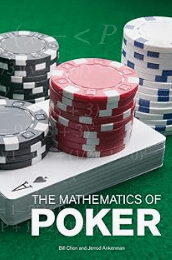
The Mathematics of Poker by Bill Chen and Jerrod Ankenman
Chen and Ankenman make the case that poker strategy can be derived mathematically from first principles rather than assembled from observation and intuition. The book covers game theory, Nash equilibria, and optimal strategy construction using real mathematics — not hand-wavy references to GTO. It requires more comfort with quantitative thinking than most books on this list. If you’ve worked through Janda and want the theoretical foundation underneath it, this is where it lives.
Online Poker
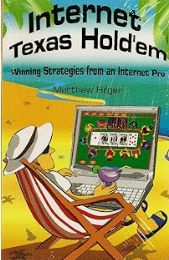
Internet Texas Hold ’em: Winning Strategies from an Internet Pro by Matthew Hilger
Written in 2003, when online poker was new enough that dedicated strategy for it was worth a standalone book. Hilger covers the adjustments that matter — table selection, multi-tabling, note-taking, online-specific tells, and bankroll management for the faster online pace. Some sections show their age, but the fundamentals of disciplined online play hold up.
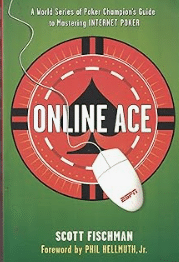
Online Ace: A World Series of Poker Champion’s Guide to Mastering Internet Poker by Scott Fischman
Fischman won two WSOP bracelets in 2004 and followed it with this book on online tournament strategy. The focus is MTTs — building a stack early, managing the bubble, adjusting at the final table. More personal and anecdote-driven than Hilger; less systematic but more readable. If online tournaments are your format, worth pairing with Harrington’s volumes.
Across these books, you get theory, psychology, math, and firsthand accounts from players who built real careers at the table. Pick what your game is missing and work through it.
👉 Use Referral Code: WINBIG 👈PLAY ONLINE POKER HERE
About the Author: Maury Orton is a poker writer and editor contributing to GGPoker. He focuses on clear, reliable explanations of the game, drawing on years of experience in online poker media and digital publishing.